


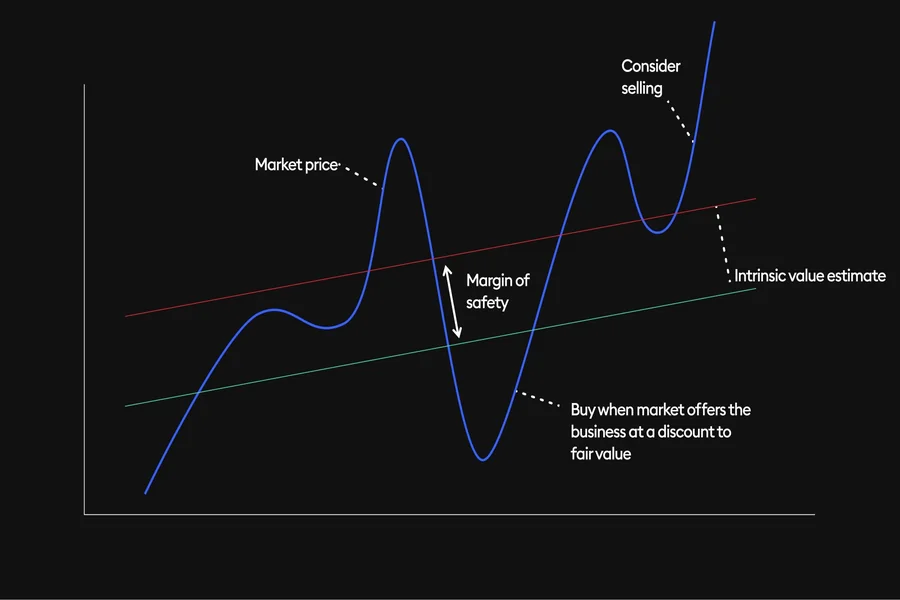
Most people look for value after it’s obvious. Prices rise. Headlines appear. Demand spikes. By then, the opportunity is mostly gone.
Spotting value early is different. It requires paying attention before the crowd shows up. It means looking where others are not looking yet.
This applies across markets. Art. commodities. real estate. emerging assets. The pattern stays the same.
Look Where Attention Hasn’t Arrived Yet
Value often sits in quiet places first.
Early collectors, operators, and builders notice activity before recognition. Small groups gather. Conversations start. No headlines yet.
One gallery owner described seeing early work from an unknown artist. “The room was empty. Maybe five people showed up. A few years later, you couldn’t get near the work.”
Nothing changed about the piece itself. Attention changed.
Markets follow attention. Not the other way around.
Watch Behavior, Not Just Price
Price is a lagging signal.
Behavior comes first.
Who is showing up? Who is buying repeatedly? Who is talking about it when no one else is?
A trader once tracked a niche commodity market. “The price looked flat. But shipments started increasing. That told me something was changing before the numbers caught up.”
The same applies in art and collecting. Early buyers tend to move quietly. They focus on patterns, not spikes.
Small Clusters Signal Big Moves
Early value shows up in small clusters.
A few collectors are buying consistently. A few operators are building in the same space. A few communities are forming around an idea.
These clusters are easy to ignore. They don’t look impressive at first.
Then they grow.
Data from venture markets shows that early-stage sectors often start with a handful of active participants before expanding rapidly. The same pattern appears in collectibles and physical assets.
“Pay attention when the same names keep showing up,” one collector said. “That’s usually not random.”
Clusters create momentum.
Inefficiency Is an Opportunity
Markets reward efficiency. Early value often hides in inefficiency.
Long travel times. poor distribution. underused assets. These gaps create opportunity.
Adam Weitsman once pointed out that inefficiency shows up in physical systems first. “You’d see trucks driving too far just to drop off material. That’s wasted time. Fix that, and the value is already there.”
This idea applies broadly.
Where time is lost, value can be created.
Ignore Noise, Focus on Signals
Markets produce constant noise.
News cycles. social chatter. rapid price movements. Most of it distracts from real signals.
Signals are quieter.
Consistent activity. repeat buyers. steady growth in participation.
A collector recalled watching a market that didn’t move for months. “Nothing exciting was happening. But the same people kept buying. That told me more than any price jump.”
Noise attracts attention. Signals build value.
Scarcity Matters, But Context Matters More
Scarcity gets overused.
Limited supply alone does not create value. Many scarce assets fail.
Context determines whether scarcity matters.
Vincent van Gogh’s work was scarce during his lifetime. It had little value. Cultural context changed later. Value followed.
Scarcity without demand does nothing.
Scarcity with attention creates pressure on price.
Cross-Market Signals Reveal Early Trends
Value rarely appears in a single place.
It shows up across related areas.
An artist gaining attention in galleries may also appear in fashion or media. A material gaining demand in one industry may show up in another.
These overlaps are early indicators.
One investor noticed increased interest in a specific type of metal across multiple sectors. “It wasn’t just one buyer. Different industries started pulling at the same supply.”
That convergence signaled rising value.
Data Confirms, It Doesn’t Lead
Data helps confirm patterns.
It does not create them.
Key metrics to watch:
- volume trends
- distribution of ownership
- repeat activity
- supply constraints
In many markets, early-stage growth happens before strong data appears.
A report from CB Insights shows that high-growth sectors often have limited early data, with clear trends only emerging after initial adoption.
Waiting for perfect data means arriving late.
Emotional Signals Matter More Than People Admit
Value is not purely logical.
Emotion plays a role.
Collectors buy what resonates. Operators invest in what feels right based on experience.
One collector described buying a piece that later increased in value. “It didn’t make perfect sense on paper. But it felt important. That turned out to matter.”
When many people share that reaction, value builds.
Emotion drives attention. Attention drives markets.
Repetition Creates Confidence
Early signals repeat before they scale.
A single data point means little. Repeated behavior builds confidence.
Consistent buying. Steady usage. Ongoing discussion.
These patterns reduce uncertainty.
“Once I saw the same pattern five or six times, I stopped questioning it,” one operator said. “That’s when I moved.”
Repetition turns observation into action.
Time Is the Advantage
Most people want immediate results.
Early value requires time.
Signals appear slowly. Recognition follows later.
Patience creates an advantage.
A collector held pieces for years before seeing major price movement. “Nothing happened for a long time. Then everything happened at once.”
Time separates early participants from late ones.
Risk Never Disappears
Early-stage value carries risk.
Many opportunities fail.
According to industry data, a large percentage of early-stage ventures fail. Similar patterns appear in collectibles and emerging markets.
This makes selection important.
“You have to accept that not everything will work,” one investor said. “The goal is to find the few that do.”
Risk is part of the process.
Build a Process, Not a Guess
Spotting value early is not luck.
It is a repeatable process.
Watch behavior. track patterns. identify inefficiencies. Look for clusters.
Then act with discipline.
This reduces the guesswork.
Why This Still Works
Markets change. Tools evolve. access increases.
Human behavior stays consistent.
People gather around ideas. attention builds. Demand follows.
That pattern does not shift.
“Value shows up before the market notices,” one collector said. “You just have to be looking in the right place.”
The Real Edge
The advantage is not speed.
It is perspective.
Seeing what others ignore. acting before recognition. staying patient while patterns develop.
That is how value gets spotted early.
It is not about predicting the future.
It is about noticing the present more clearly than others do.
