


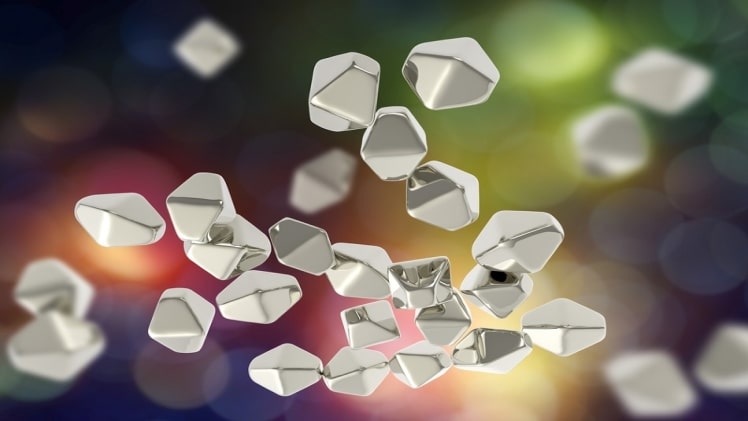
The internal structure of a metal is made up of individual crystalline areas, called “grains.” The design, size, and orientation of these grains result from the composition of the material (alloy) and the way it is formed (e.g., forging, casting, or additives). The grains are formed from molten material that solidifies and interacts with each other and with other components, such as phases and contaminants. Usually, the grain structure is adapted to technical application. Search to know tungsten carbide recycling company
The size and orientation of the grain and other structural characteristics are directly related to the mechanical and technological properties of these materials. These structural characteristics depend also on subsequent outer influences. These influences consist of:
- Chemical effects, for instance, corrosion
- Physical and chemical consequences, for instance, heat treatments
- Mechanical products, following the forming process, for instance, forging, bending, rolling, etc.
Microstructure
The microstructure can be only evaluated with a microscope (stereomicroscope, optical microscope with reflected light, digital or scanning microscope, as well as transmission electron microscope). Typically, the size of the observed features ranges from millimeters to micrometers and even nanometers. Observing the microstructure is very useful in various investigations; for example: to determine grain sizes, check for defects, prepare targets in microelectronics, analyze flaws or welds of all kinds.
Macrostructure
The macrostructure can be noticed using naked eye, with a magnifying glass, or a stereomicroscope. These inspections are less common compared to microstructural investigations. Applications where the macrostructure is usually observed, are welding, castings of some metals without iron, or deformation and segregation in castings or forgings. The evaluation of coatings or geometries can also be the subject of macrostructural investigations.
Why The Microscopic Analysis?
After the metallographic preparation is complete, the structural properties of a metal can be analyzed under a microscope. Then it is possible to conclude the characteristics of the material. For example, microscopic analysis can evaluate the design characteristics of the metal and the phases of the process, even cases where it has been damaged.
Structural elements that can be evaluated with an electron or light microscope include:
- Grains/crystallites and their grain boundaries
- Intermetallic phases and precipitates
- Non-metallic inclusions and phases
- The evaluation is based on the following criteria:
- Type and shape
- Size and number
- Distribution and orientation
Based on all this information, it is possible to create a comprehensive description of the microstructure and draw conclusions about its possible characteristics.
Alloy Information
The materials used in practical applications are a mixture of various chemical elements known as “alloys.” Steel and cast iron, for example, are essential alloys based on iron (Fe) with the addition of carbon (C), which is responsible for the hardness of the ferrous material. The microstructural analysis allows us to know the properties of the alloy, such as its strength, hardness, and flexibility.
Metallographic Preparation Of Metals For Microstructural Analysis
To ensure the correct representation of the structural properties of a metal, the sample must be prepared correctly. The following steps provide an overview of the process, although the metallographic preparation method should focus on the material.
Step 1: Cutting Workpieces For Microstructural Analysis
A wet abrasive cutting process is used to take a representative sample from the workpiece. The cutting process should be chosen to ensure that the specimen is not subject to structurally altering damage and focus on the material and its application.
Step 2: Drawing Samples For Microstructural Analysis
A deep drawing process will be used to fix the cut pieces to be handled more efficiently and standardized. Various hot and cold drawing techniques will be applied, although the usual are epoxy or acrylic resins.
- Cold drawing: up to approx. 100 ºC, at atmospheric pressure or under vacuum
- Hot stuffing: at 350 bars and 180 ºC maximum
Step 3: Grinding And Polishing Of Samples For Microstructural Analysis
The grinding and polishing process is the essential step in preparing a model for microscopic examination. During this process, the macroscopic roughness of the cut surface is reduced to a reflective surface. Click to see tungsten carbide recycling company
