


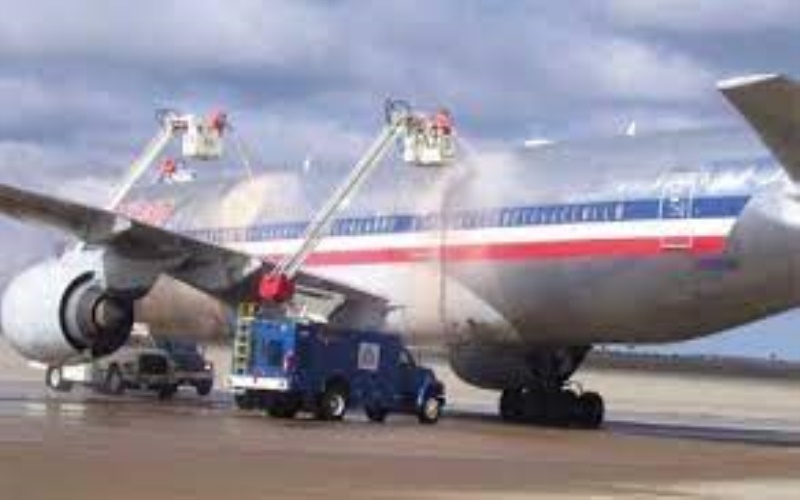
Deicing airport runways is a critical task that ensures the safety and efficiency of air travel during winter months. The use of deicers is a scientifically backed strategy to combat ice formation, providing the necessary conditions for aircraft operations even in freezing weather. This article delves into the various types of deicers used on airport runways, explaining the science behind these agents, their application methods, and their crucial role in preventing dangerous ice build-up.
Types of Deicers for Airport Runways
Deicers for airport runways can be broadly categorized into chemical and non-chemical methods, each with its unique mechanism for melting ice and preventing accumulation.
Chemical Deicers
- Chloride-Based Salts: Including sodium chloride (rock salt), magnesium chloride, and calcium chloride, these salts lower the freezing point of water, preventing ice formation.
- Acetates: Potassium acetate and sodium acetate are less corrosive alternatives to chlorides, widely used in airports due to their lower environmental impact.
- Formates: Sodium formate and potassium formate offer effective deicing capabilities, especially suited for airport environments where corrosion and environmental safety are significant concerns.
Non-Chemical Methods
- Infrared Heating: Utilizing infrared technology to directly heat runway surfaces, melting ice without the need for chemicals.
- Electrical Heating Systems: Some runways are equipped with embedded electrical systems that warm the surface to prevent ice formation.
How Deicers Work
The effectiveness of deicers lies in their ability to lower the freezing point of water, a process known as freezing point depression. By disrupting the formation of ice, these agents ensure that water remains in a liquid state, even at temperatures below the normal freezing point. The choice of deicing agent depends on several factors, including environmental impact, application efficiency, and the specific freezing point depression needed for local climate conditions.
Application Methods
The method of applying deicers is as crucial as the type of deicer used. Efficient application ensures maximum coverage and effectiveness while minimizing environmental impact.
- Pre-Treatment: Applying liquid deicers before a snowfall can prevent ice from bonding to the runway surface, making it easier to remove.
- Direct Application: Solid deicers are often spread directly onto icy surfaces using specialized equipment, such as how long does ice take to melt.
Preventing Ice Build-Up
The ultimate goal of runway deicing is to prevent the accumulation of ice, which can pose significant hazards to aircraft during takeoff and landing. By maintaining a clear runway, airports can avoid delays and ensure the safety of flights and passengers.
- Regular Monitoring: Airports continuously monitor weather conditions and runway surfaces to determine the need for deicing operations.
- Adaptive Strategies: Deicing strategies are adapted based on the severity of weather conditions, with airports ready to deploy a mix of chemical and non-chemical methods as needed.
For an in-depth exploration of the different types of deicers and their mechanisms, resources like Types of Deicers Used for Airport Runways provide valuable insights into how these solutions are applied in real-world scenarios to keep runways safe and operational.
In conclusion, understanding the mechanisms of deicers on airport runways is essential for winter airport operations. Through the strategic use of various deicing agents and techniques, airports can effectively mitigate the risks associated with ice build-up, ensuring the safety and punctuality of air travel during the winter season.
