


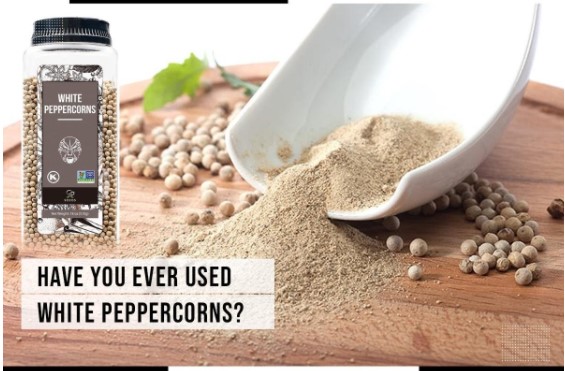
When you consider how prevalent black pepper is—always in a shaker next to the salt—strange that white pepper feels so mysterious, especially considering how common it is in East Asian and confident European cooking. It’s a typical congee seasoning, the heat source in hot and sour soup, and it hides in pommes purée and béchamel. Both white and black peppercorns begin as the same fruit on the same pepper plant. They’re a fruit, that’s correct! In reality, the lesser-known green and red peppercorns are also derived from the same plant. Green peppercorns are collected in January, and red peppercorns are harvested several months later, in March and April. We’ll concentrate on black and white beans, both picked in the middle of the season but processed in different ways. (Pink peppercorns are an outlier: they grow on another plant but have the same name because of their flavor, shape, and size.)
As soon as they are harvested, black peppercorns are dried. Their skin turns black and shriveled (take a careful look at entire black peppercorns—they’re pretty wrinkled). The flavor is pretty apprehensive—spicy but not scorching. If you use enough of it, your mouth will tickle. White pepper is native to tropical Asian regions. Black and white pepper are both sourced from the same plant. They are, however, prepared differently. Cooking the dried unripe fruit yields black pepper. Cooking and drying the ripe seeds yields white pepper.
- White pepper is used to treat stomach distress, malaria, a bacterial illness that causes diarrhea (cholera), and cancer.
- White pepper is applied to the skin to relieve discomfort.
- White pepper is used to flavor dishes and beverages.
- Aromatherapy makes use of white pepper essential oil.
Piperine is a chemical found in white pepper. This molecule appears to have a wide range of actions in the body. It seems to alleviate pain, enhance breathing, and decrease inflammation. Piperine seems to increase brain function as well. However, it is unclear how. Although black and white peppercorns are the fruit of the pepper plant, they are handled differently. When black peppercorns are nearly ripe, they are collected and sun-dried, resulting in a black outer covering. The outer coating is removed before or after drying to get white peppercorns, leaving only the internal seed.
White pepper has a stronger flavor than black pepper, but it is less complex, with fewer flavor characteristics. High-quality peppercorns of any variety have more floral, spice, and fruit aromas than generic peppercorns. Candy suggests Pendery’s pungent Muntok white and Tellicherry black peppercorns. Freshness is essential for good white pepper, which goes stale and bitter sooner than black pepper. When black peppercorns are nearly ripe, they are collected and sun-dried, resulting in a black outer covering. White pepper, on the other hand, is utilized in several cuisines for its distinct flavor. It’s popular in Chinese cookery, and petradish incorporates it into fragrant Vietnamese soups and pork meals and many Swedish recipes.
Both black and white pepper is derived from the same peppercorn plant, but their flavors differ due to process. The peppercorns are initially green, but black peppercorns are sun-dried, while white peppercorns whole have the outer coating removed before or after drying, leaving the white seed. Black pepper is made from berries that are collected before they are mature. The skin of these unripe green berries is blackened and wrinkled after they are cooked and dried. White pepper, on the other hand, is created from completely matured berries. The ripe berries are steeped in water and fermented, eliminating the outer peel. Only the inside of the seed has been dried. Black pepper, when freshly ground, is generally characterized as spicy, fragrant, and pungent. Because the compounds pull away when the skin is removed, white pepper has less intense heat—at the same time, letting the berries fully develop and ferment results in a more nuanced, earthy flavor in white pepper.
