


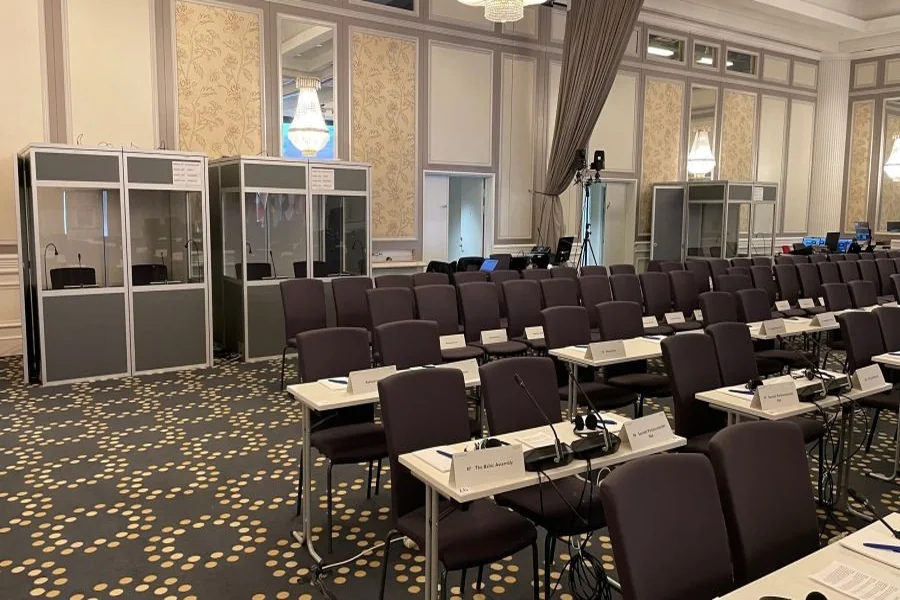
In the world of simultaneous interpretation, technology, human expertise, and spatial planning converge to ensure clear and efficient multilingual communication. While many event planners obsess over interpreter selection or equipment quality, one crucial yet often overlooked factor is the design and layout of interpreter booths. These booths are more than just enclosures—they’re the heart of the interpretation setup and significantly impact both interpreter performance and audience experience.
This article will guide event organizers, AV technicians, and venue managers through best practices for designing and positioning interpreter booths, with a clear focus on space optimization, acoustic integrity, and international standards.
Why Interpreter Booth Design Matters in Simultaneous Interpretation
At conferences, summits, corporate town halls, and even government meetings, simultaneous interpretation is what enables real-time multilingual communication. However, even the most skilled interpreters and advanced audio equipment cannot compensate for poor booth layout or subpar acoustics.
A well-designed interpreter booth:
- Enhances interpreter concentration and efficiency.
- Minimizes audio leakage and external distractions.
- Improves audience listening quality.
- Meets compliance requirements for large-scale international events.
In short, the physical environment directly impacts the quality of interpretation.
Types of Interpreter Booths: Portable vs. Permanent
Before diving into design specifics, it’s important to understand the two main categories of interpreter booths:
- Portable Booths
These are modular, mobile booths ideal for temporary setups like hotel ballrooms, convention centers, or rented venues. Their flexibility makes them suitable for short-term events. - Permanent Booths
Built into conference centers or legislative halls, permanent booths are integrated into the building’s architecture. They often feature advanced soundproofing, ventilation, and connectivity.
The choice between the two depends on your event’s duration, frequency, and venue constraints. Regardless of the type, both must adhere to specific design principles.
International Standards: ISO 4043 and ISO 2603
The International Organization for Standardization (ISO) provides two main standards for simultaneous interpretation booths:
- ISO 4043: Guidelines for mobile (portable) booths.
- ISO 2603: Guidelines for permanent booths.
These standards cover aspects like:
- Minimum internal dimensions.
- Visibility lines for interpreters.
- Air circulation and ventilation.
- Lighting and electrical outlets.
- Soundproofing quality.
Tip for Organizers: If you’re planning a high-stakes or international event (e.g., involving UN representatives, EU commissions, or multinational corporations), ISO-compliant booths are often mandatory.
Interpreter Booth Dimensions: Optimizing Comfort and Functionality
A common mistake is treating interpreter booths as an afterthought, cramming them into leftover venue space. However, proper spatial planning is vital.
Recommended Dimensions (ISO Guidelines):
- Width:60–2.40 meters per interpreter
- Depth:60 meters minimum
- Height:00–2.30 meters
- Working Surface Depth: Minimum of 0.45 meters
For a two-person booth (the standard for most events), the recommended size is around 2.40m (W) x 1.60m (D) x 2.00m (H).
Layout Essentials:
- Each interpreter needs a comfortable desk space, monitor (if applicable), headphone jack, and personal light.
- There should be enough legroom and ergonomic chairs.
- Entry/exit should be easy, especially for events with tight turnaround times.
Acoustics: Soundproofing and Audio Quality
Acoustic design is arguably the most important factor in simultaneous interpretation booths.
External Noise Isolation:
- Walls, doors, and glass panels should be sound-insulated.
- The minimum sound insulation requirement is 25–30 dB (per ISO).
- Avoid placing booths near speakers, entrance doors, or food/beverage stations.
Internal Sound Management:
- Use absorbent materials inside the booth to prevent echo or audio bouncing.
- Integrate high-quality headsets and microphones with noise-canceling features, ideally incorporating luxury technology that enhances clarity and ensures a premium interpretation experience..
- Install soft wall and floor coverings (like carpeted floors and felt interiors).
Ventilation Noise:
- Use silent or low-noise fans and ventilation systems. Interpreter fatigue increases with poor air circulation and excessive noise from AC vents.
Booth Placement: Where Should They Go in the Venue?
A great booth design fails if placed poorly.
Front vs. Back of Room:
- Front/side placement offers better line of sight to speakers and presentations, crucial for interpreters who rely on lip-reading or body language.
- Back placement may be necessary due to space or logistics, but must be compensated with video monitors showing the speaker’s face and slides in real-time.
Height and Elevation:
- The booth should be elevated slightly (10–15 cm) if placed at the back for a clear sightline.
- Avoid placing booths on uneven ground or near obstructions like pillars.
Distance from the Stage:
- Ideal distance: 5–25 meters depending on room size.
- The interpreter should clearly see the speaker’s face and gestures without binoculars or extreme zooming.
Visibility and Lighting: See and Be Seen
Visibility directly affects interpreter performance. Booths must provide:
- Unobstructed line of sight to the stage/speakers.
- Clear view of screens/presentations (or have internal monitors).
- Internal lighting that is adjustable and does not create glare or shadows.
Some events integrate booth-mounted screens, especially for events with multiple parallel sessions or dynamic visual content.
Connectivity and Power Supply
Interpreter booths are high-tech hubs. Ensure:
- Multiple power outlets are available for consoles, headsets, monitors, and lighting.
- Backup power solutions are planned for longer sessions.
- Booths are wired to the central audio distribution system with fail-safe protocols in place.
Accessibility and Safety
Don’t ignore interpreter well-being.
- Booths should be easily accessible for individuals with disabilities.
- Ensure proper ventilation—avoid sealed environments, especially during long sessions.
- Provide fire safety measures (e.g., smoke detectors or alarms).
- Place a bottle of water and backup headset for each interpreter.
Aesthetics & Branding
While functionality takes precedence, modern booths can also be aesthetically pleasing.
- Branded booth exteriors with event or sponsor logos can add a polished, professional look.
- Use neutral interior colors to reduce eye fatigue for interpreters.
- Choose materials that align with the event’s visual identity, especially for high-profile broadcasts.
Budgeting for Interpreter Booths
Cost can vary widely:
- Portable booths: $1,500 to $5,000+ depending on specifications.
- Permanent booths: Significantly higher due to architectural integration and long-term utility.
- Rental options: Often bundled with interpretation services or equipment suppliers.
Investing in quality booths might seem like a large upfront cost, but the ROI is clear when it improves interpreter efficiency, reduces technical issues, and elevates the overall experience.
Conclusion: Booth Design is Strategic, Not Supplemental
Too often, simultaneous interpretation booths are treated as “logistical leftovers” instead of strategic assets. Yet, when designed and placed correctly, they become silent enablers of global communication, helping bridge linguistic divides in high-stakes settings.
If you’re an event organizer looking to deliver a world-class multilingual experience, don’t leave booth planning until the last minute. Work with experienced AV teams, certified booth suppliers, and professional interpreters to ensure every element—right down to booth acoustics and sightlines—is optimized.
Remember: Great simultaneous interpretation starts with great booth design.
