


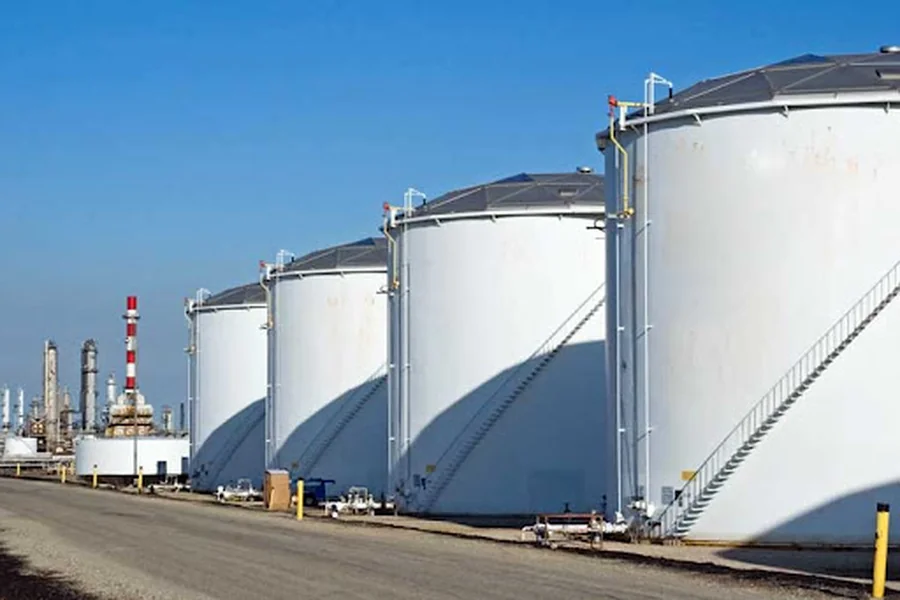
Look around any major plant, and you’ll see it — rows of metal giants standing silent under the sun. But the real difference isn’t what meets the eye. It’s the intelligence built inside. Modern industrial storage has become a thinking ecosystem. The tanks, the silos, the farms — they aren’t static steel anymore. They’re strategic, self-aware systems built to outthink pressure, time, and uncertainty.
-
Secure Containment That Thinks Before It Breaks
In liquid-heavy sectors, risk isn’t theoretical; it’s a heartbeat away. Today’s most intelligent storage systems don’t wait for a problem; they prevent it in real time. Adaptive venting systems in your storage tank now read pressure fluctuations like a pulse, adjusting automatically to avoid micro-failures that used to go unseen.
Before a single weld is made, simulations are run across thousands of thermal and pressure profiles, digital rehearsals for physical certainty. This is not traditional engineering; it’s predictive craftsmanship. For plant administrators and energy executives, it’s no longer about owning tanks; it’s about owning confidence. Containment, done right, doesn’t just store; it protects, preserves, and preempts.
-
Silos That Refuse to Stand Still
Dry material storage was a passive process — fill, settle, empty, repeat. That’s over. The latest silo systems breathe, react, and self-correct. Dynamic aeration floors control airflow at microscopic levels to keep material uniform. Flow-responsive cones redirect load pressure before compaction even begins.
Sensors whisper data to the control panel when a humidity spike hits, helping adjust aeration without human touch. For those managing production lines that depend on precision feedstock, these silos have become living components of the process. They prevent waste, protect yield, and remove the hidden chaos of downtime. And yes, this is where design meets empathy; it listens to how materials move and responds intelligently.
-
Tank Farms That See Before You Do
Traditionally, walkthrough human inspections helped define core diligence. Now, visibility lives in data streams. Modern tank farms act like digital twins of themselves by mapping temperature, fluid movement, and corrosion in real time.
- Ultrasonic sensors measure depth and density with surgical precision.
- Drones map corrosion in places no human should crawl.
- Predictive AI models forecast fatigue months before failure.
For administrators, this isn’t just operational ease — it’s control reborn. You don’t react anymore; you orchestrate. Downtime becomes rare, not routine. Problems are found before they can introduce risk. The old catwalk-and-clipboard mindset is fading. The future watches itself.
-
Infusing The New Architecture of Sustainability
Sustainability in storage isn’t about ticking an environmental box anymore, but about more innovative, stronger construction. Modular fabrication is leading this change. Instead of building tanks entirely on-site, most of the work now happens in controlled factory settings. The process reduces waste, shortens project timelines, and eliminates many errors that would otherwise appear only after installation.
Every section undergoes strict quality checks and benefits from precision and micro-welding technologies. It is tested before it reaches your facility to achieve tanks that last longer, resist corrosion better, and are easier to maintain. Also, reliable manufacturers are taking advantage of material innovation, shifting to low-carbon steel and using recyclable linings when tanks end their service life. T
In short, sustainability isn’t just a moral choice; it’s an operational advantage. Facilities adopting these modern builds are not only meeting today’s standards but also shaping what “responsible industry” will mean in the next decade.
Ultimately, in this industry, storage isn’t about standing still; it’s about standing ready and ahead. The most innovative storage reliant manufacturers know that tanks and silos are no longer steel boxes; they’re strategic infrastructures of trust. Those who engineer storage with awareness, precision, and accountability aren’t just building containment, they’re building continuity in a world that demands resilience.
